Thursday, August 29, 2013

Coconut Oil for the Skin


Looking for a quick and easy way to cut your exposure to synthetic chemicals? Try using coconut oil instead of lotion.


The lotion I recently replaced contained 11 ingredients, the first being water, four others needing to be looked up because I had no idea what they were, and three of those showing moderate concerns about toxicity by the environmental working group. So not the worst product out there, because I already care about stuff like that, however, improvements could still be made. 
Coconut oil contains one ingredient plain and simple.

Bonus: for a weekend treat try popping some popcorn in coconut oil. It gives the popped kernels a nice buttery flavor, eliminating the need for actual butter, just salt and enjoy. Doing it this way also means you're not using pre-packaged popcorn thus eliminating the chemicals used to line the bags and make the butter flavor.

-KO

Saturday, August 10, 2013

Energy System Training


I’ve been doing some study on energy system development and recently came across a video that really impressed me. For starters it is presented by a really smart guy, Eric Oetter, but it's also backed up by scientific data; especially one, the Tabata study, that often gets used to promote high intensity work not aerobic training. Here I’ll offer some of the highlights of the video and a link to a written version of the presentation if you care to read it in its entirety.


One of the first takeaways was that the lactic and alactic energy systems (anaerobic systems that produce short, explosive power) have the ability to be improved upon by about 30% each. The aerobic system, on the other hand, can see up to a 240% improvement. This is why so many “average” people can train for and actually complete a marathon, but very few can post competitive 100M sprint times.


Next was how many negatives there are to focusing primarily on anaerobic type training. Please note that I didn't say high intensity work is bad in general, but because it’s extremely sympathetic nervous system driven, heavy use of anaerobic training can cause a host of negative adaptations especially coupled with the stressors of modern life. People can become “stuck” in a sympathetic state where their body never really gets into recovery mode. They just end up in a continual “fight or flight” state creating a negative feedback loop which is generally not good for ones health.


One of the main adaptations to continual lactic type training is a thickening of the myocardium of the left ventricle. In other words body building for the heart, which allows a stronger contraction but limited ability to stretch. This means the stroke volume, amount of blood pumped out at each contraction, isn’t increased so the only way to get more blood to the body as exercise intensity increases is by increasing pump speed. Focusing on an aerobic base first causes an overall larger left ventricle so the heart has a larger capacity. This means a higher stroke volume or more blood ejected on each contraction, which equates to a lower overall heart rate. This is good because a resting heart rate above 60 beats per minute usually equates to someone more or less stuck in a sympathetic state, a continual fight or flight mode, which is not a good thing. If you are someone with limited capacity for exercise duration you may want to check your resting heart rate, if it’s above 60 you would probably benefit greatly from increased aerobic training.


Left ventricle hypertrophy creates a stronger contraction, but limited ability to stretch and take in more blood.


Lastly, and most interestingly to me, the Tabata study was used to back up the idea that one should focus on building a good aerobic base rather than doing super high intensity work all the time. The Tabata study showed that the participants who performed the high intensity protocol saw an increase of about 23% in anaerobic capacity over the first four weeks. They realized another 5% increase over the subsequent two weeks, totaling a 28% increase in about 6 weeks. The part that is so fascinating is that if the body has the capacity to improve the anaerobic systems by about 30% total and it only took 6 weeks to see a 28% increase, there really isn’t a need to continue doing high intensity work past this point. 


The take-home is basically that when mapping out a training program, aerobic work should come first, followed by alactic work, and lastly the high intensity stuff about six – eight weeks from competition. Or, if you don't have a specific competition date, don't neglect training at lower intensities to realize aerobic based training adaptations. 

-KO

Sunday, July 7, 2013

A Couple of Things...


-->A couple of quick things about food...


--> Got the above quote from a friend and couldn’t agree more. Cutting out processed food and soda will improve ones health plain and simple. Nothing fancy required, just real honest to goodness food.

On a similar note...


  -->
If farmers have to wear suits like this to work the fields we may want to seek alternative growing options. After seeing this picture, no argument can be made against the fact that the chemicals being used to improve crop yields just aren’t good for our health.

-KO

Saturday, June 15, 2013

Hinge and Squat Movement Patterns

-->

Squats And Deadlifts; Not Just For The Boys

This post will expand on the "movement based training" post from last year. If you haven’t read the post or aren’t familiar with this approach to exercise programming I would recommend starting here for basic perspective. In this post I’m going to focus primarily on the lower body portion of a movement-based program and expand a bit on the content from last time.


The lower body portion of a movement based system should be thought of as having two main movement patterns: “squat” and “hinge”. The “squat” pattern contains knee dominant exercises like squats, lunges, step-ups, etc., which are biased toward the anterior chain or the front of the hips. The “hinge” pattern is hip dominant and includes all deadlift varieties and hip extension exercises. These exercises are biased toward the posterior chain or the back of the hips. By splitting the lower body exercises into these two categories we can control the strength balance around the hip complex, which is very important for performance enhancement as well as injury prevention.

Traditional Deadlift

With the deadlift ("hinge") there is a much stronger focus on extending (opening) the hips as the weight is lifted off the floor. You will notice that the athlete above begins with the hips higher and the back more parallel to the floor than with a squat. This opening of the hip angle makes the glutes and hamstrings the focus since they are the primary hip extending muscles.

Back squat                          Front squat 


With the squat we see that the hips are lower, which increases the angle at the knee making it a more quad dominant movement. Bar placement will change the loading a bit with the front squat being the most quad dominant of the two due to the anterior loading and more upright body position (less acute hip angle). 

Barring injury or major movement restriction I almost always teach these two movements because of the benefit they provide and how functional to life they are. I will generally work into the deadlift after a few weeks/months depending on ability, but the squat movement can usually be taught right away unloaded.

Other "hinge" pattern (hip dominant) exercises:  

Romanian Deadlift (RDL) - though I prefer to see a neutral neck like the picture below.


Single Leg RDL


Glute/Ham Developer (GHD) - Hip Extension


Hip Extension


Single Leg Hip Extension


Hip Thrust (loaded hip extension, can be done with shoulders elevated like the hip extension above)

Other "squat" pattern (knee dominant) exercises:


Lunge
Step Up


Rear Foot Elevated or Bulgarian Split Squat

While this is not an exhaustive list it represents some of the best exercises from each group. 
Make sure to alternate between each lower body movement to evenly train the hips and don't neglect the single leg exercises either, balance needs to happen side to side as well as front to back.

-KO

Friday, May 24, 2013

As they do in Instanbul

-->


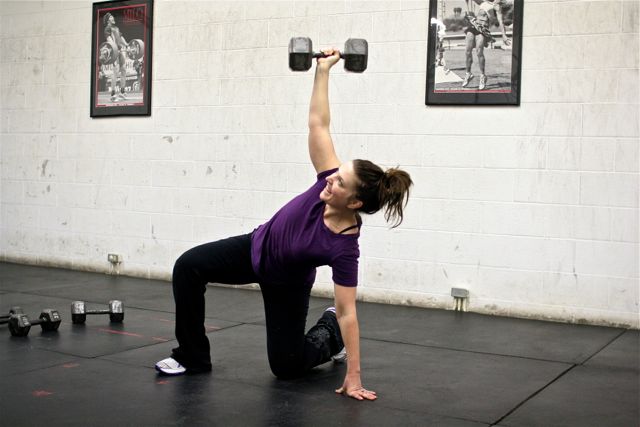
Everyone has their favorite exercise for the hypothetical argument of “if you could only do one exercise, what would it be?” The reality is there are probably a couple exercises that legitimately offer the “bang for the buck” that is needed to qualify for this scenario. The Turkish get up is definitely one of those exercises; it taxes the entire body and provides a myriad of benefits. While it doesn’t offer the overall strength building and all around beastliness of a deadlift or the cult like following of the squat, it definitely deserves a look. 

The “get up” is fantastic for creating transitional stability, forcing you to maintain composure in a continually changing position against an external load. The key to the “get up” is to take it slow, break it into multiple pieces and make sure you “lock in” each position before moving to the next.

 After safely getting the weight into place assume the starting position with the working arm locked out overhead and the leg on that same side bent (third picture). From here push yourself up to a seated position with the weight still locked out overhead (fourth picture).


Once stabilized in the seated position, extend the hips (first picture) and pull the straight leg through so you are in a kneeling position with the non-working hand still on the ground (second picture). From there "windmill" yourself up to a lunge like position with the knee still on the ground (third picture). Lastly, lunge up to a standing position, the weight locked out overhead (fourth picture). This marks the half way point, now you have to reverse the process to complete one repetition on this side. Obviously this needs to be done on the other side as well.

If the kettlebell pulls the shoulder into too much flexion a dumbbell can be used to help center the weight over the arm. 

 
Turkish Get up with dumbbell


If you have cranky shoulders and the overhead position is less than pleasant, a sandbag get up might be the ticket.


Sandbag get up


 All in all this is a great exercise that can be very challenging when done right and loaded appropriately. If this is totally new to you feel free to start with no weight, just lock the arm out overhead and don't forget to keep it that way as you move.
-KO


Sunday, December 23, 2012

Rise up... against forearm and wrist issues

-->
Rise up... against forearm and wrist issues

I know it may seem unending and potentially a little overwhelming, but soft tissue work can make a huge difference in the way you feel. For this installment I want to look at an area that often flies under the radar, but probably affects everyone to some degree: the forearm.

Most people should be able to relate to this because who hasn’t spent extended time on the computer only to have their wrist and lateral (outside) elbow feel terrible? I spend less time on the computer than most office workers but find that my forearm gets plenty “junked” up, especially on the lateral side of the elbow. There are a few reasons for this; first, the lateral epicondyle (outer knob of the elbow) is a point of convergence for the wrist extensor muscles as many of them originate there or close to it. 

The graphic on the left shows how many extensors originate at the lateral epicondyle

Second, when we do activities that require extended pronation (palms down) it puts these muscles in a lengthened position, not to mention causing potential overuse of the pronator quadratus and pronator teres on the opposing side.


All of this means that everyone from the sedentary desk jockey to the most active athlete that trains regularly can experience issues in the forearm. Taking care of this tissue is important considering carpal tunnel and other arm/wrist syndromes are often the result of inflamed arm/wrist tissues.
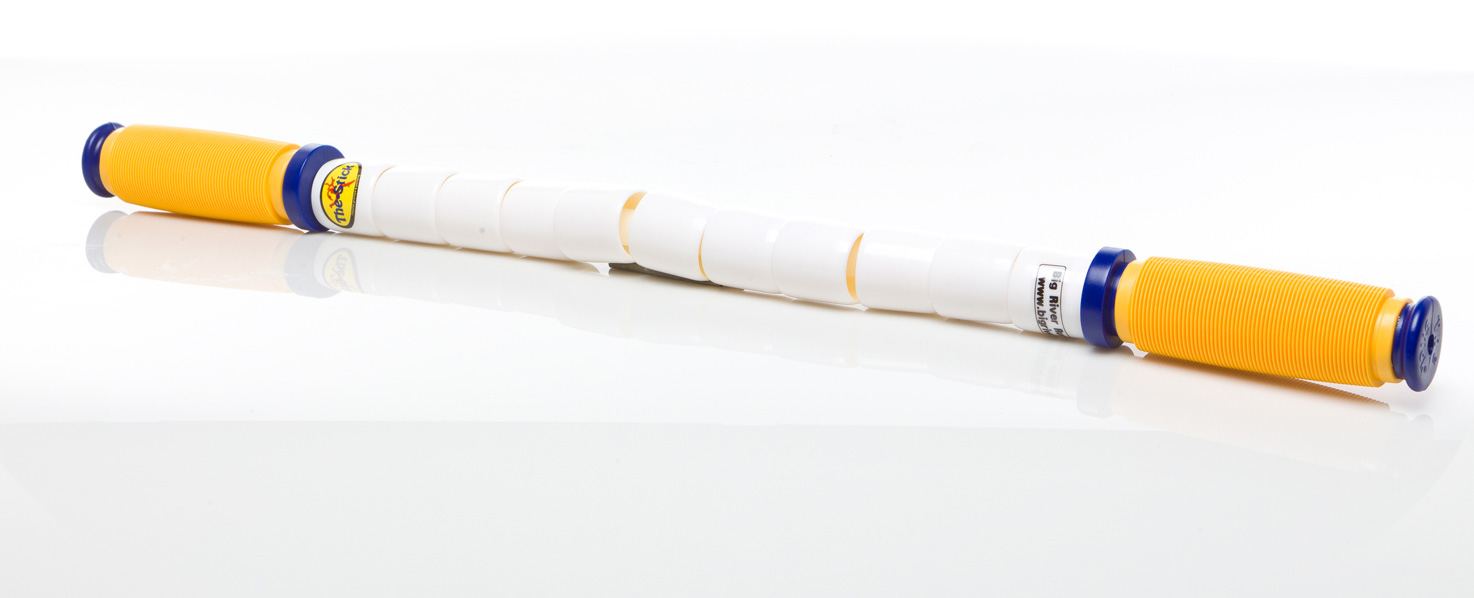
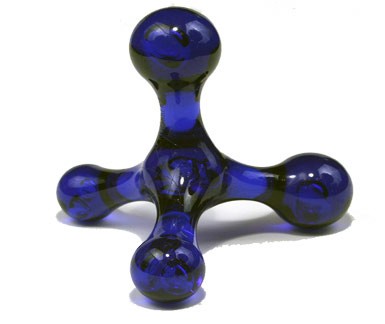
Treating these tissues is not unlike treating leg, hip, or back tissues discussed in earlier posts, however, rollers and lacrosse balls tend to be inefficient on the arm. A couple of tools I've found to be effective are the stick, an index or jack nobber, and one of the most intense tools I've used in a while, the armaid.

The Stick

 The stick is best used with one end braced against a stationary object with the other in your free hand. Push the forearm into the stick and roll the tissue through the points of pressure created by the rollers.
Jacknobber
 The jacknobber is a tool i keep by my computer because it's small and easy to use while reading or web surfing. It doesn't slide over the skin as easily as the stick or armaid, but it can be effective for tissue release through targeted pressure and gentile rotation.

The Armaid Device
 The armaid is an intense device. Strap this to your leg, clamp down on one of your arms and pull it through; extra credit to those who don't make a pain face. Despite the discomfort this can create it does wonders for releasing the tissue of the forearm and wrist.
In conclusion, most will benefit from addressing the forearm since it's an area of high use in all populations even sedentary, computer based ones.

Saturday, November 24, 2012

Some thoughts about footwear

-->
Complicated much?

When discussing physical adaptations to modern life, the conversation wouldn’t be complete without touching on modern footwear. The minimalist trend that has taken hold in the running and training worlds has provided more options, but until recently most shoes came with a healthy build up at the heel. The differential from heel to toe, called stack height, can cause a host of issues depending on how big the difference is. It is not uncommon to see a standard running shoe with a 12mm differential from heel to toe. This is like wearing a moderate high heel all of the time and as we know from previous posts, the longer one spends in a particular position the greater the possibility of adaptation. If one works in a heeled dress shoe or high heel, then spends non-work hours in running shoes like this there is a good chance the calf area (gastrocnemius, soleus, etc.) is becoming shorter. When you stand on your toes you will notice these posterior muscles flexing to raise the heel; this is the same basic thing that is happening when wearing heeled shoes. Over time this will limit the ankle’s ability to dorsiflex, or bring the toes up toward the shin. IF you suffer from chronically tight calves this may be why.
When exercising this creates an imbalance that must be overcome by relying on other areas of the body potentially leading to plantar fasciitis and other overuse type injuries. Starting in an anteriorly biased position is not optimal unless you are training for something specific like Olympic lifting or girevoy sport. For most people flatter is better. 
While this is not representative of an exercise shoe it does explain the necessary adaptations, and problem, with high heels


Thanks to the minimalist shoe trend there are some great options out there from the likes of New Balance, Reebok, Merrell, and Nike. New balance’s minimus collection offers 0mm, 4mm, and 6mm offset options. 

New Balance Minimus Trail Zero, 0mm offset shoe

The New Balance Minimus 1010, a 4mm offset with a bit more cushion for those just making the switch to a flatter shoe

Nike is similar based on which “free” shoe you’re looking at. The 3.0 series sole is going to be the most minimal with a 4mm offset while 4.0 is a bit more cushioned with a 6mm offset. 

Nike Free 3.0 v4, 4mm offset shoe
For those of you out there that just don’t want to spend upwards of $100 on a pair of training shoes don’t forget the original flat athletic shoe, Converse Chuck Taylors. These will set you back about $40 or so and are great for lifting, though, I’m not sure I’d want to run very far in them.
The "OG" of flat shoes


There are more minimalist options out there, but i just haven't been able to bring myself to sport these... 

Vibram Five Fingers "shoes"

If you really want this feel just go barefoot. I've squatted and deadlifted barefoot and it feels good, though, many gyms aren't keen on it.
One side note, for those who have never worn a shoe this flat and minimal you may want to ease your way in. I found that my calves were quite tight after switching to a 4mm offset New Balance Minimus. It took a number of weeks of foam rolling and stretching to get them to feel normal again. I did alternate between them and a pair of Nike free trainers, which I found helpful.
In closing, try to be barefoot as much as possible at home to keep the foot muscles strong and work toward wearing a flatter shoe as often as possible.